
Think Your GPA Will Get You a Job? What Recruiters Really Want from International Students in 2026
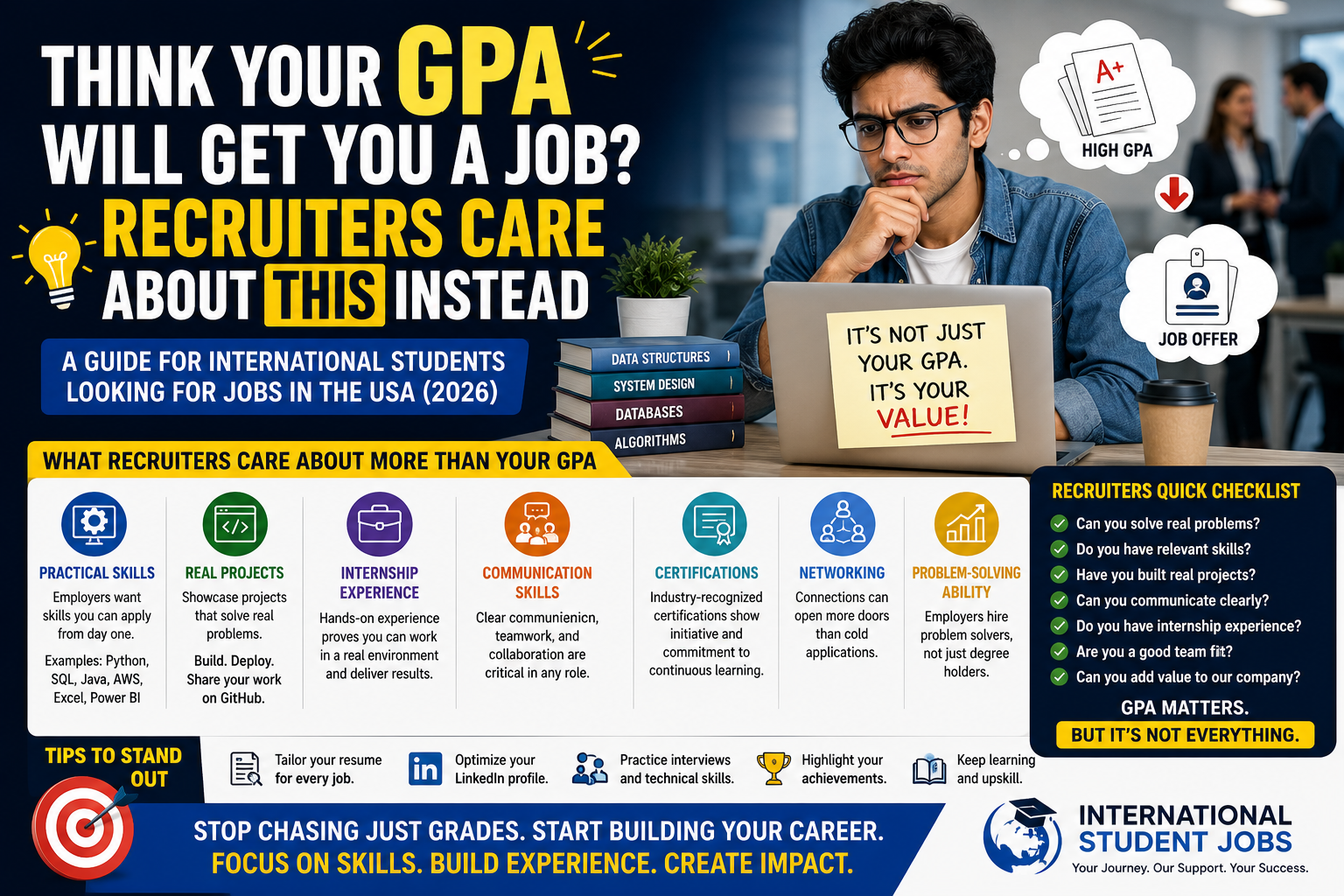
Think Your GPA Will Get You a Job? What Recruiters Really Want from International Students in 2026
Think Your GPA Will Get You a Job? Recruiters Care About This Instead
A Complete Guide for International Students Looking for Jobs in the USA (2026)
Introduction: Is a High GPA Enough Anymore?
Every semester, thousands of international students graduate from U.S. universities with excellent GPAs. Many believe that academic excellence alone will open the door to internships and full-time jobs. Yet, after submitting dozens—or even hundreds—of applications, many receive little or no response.
If this sounds familiar, you're not alone.
The truth is that while a strong GPA reflects discipline and academic ability, most recruiters don't hire based on grades alone. In today's competitive job market, employers are looking for candidates who can solve real business problems, collaborate with teams, and contribute from day one.
So, if your GPA isn't the deciding factor, what is?
Let's explore what recruiters actually prioritize when hiring international students in 2026—and how you can stand out.
Why GPA Isn't the First Thing Recruiters Look At
A GPA is a useful indicator of your academic performance, but it doesn't necessarily show whether you can succeed in a professional environment.
Employers often ask questions like:
- Can this candidate apply their knowledge in real-world situations?
- Have they worked on practical projects?
- Can they communicate effectively?
- Do they have internship or work experience?
- Can they collaborate in a team?
A perfect GPA doesn't automatically answer these questions.
That's why many recruiters spend only a few seconds looking at your GPA before moving on to the rest of your profile.
Skills Matter More Than Grades
Employers hire people who can deliver results.
For technical roles, recruiters want evidence of skills such as:
- Python
- Java
- SQL
- React
- Node.js
- AWS
- Azure
- Machine Learning
- Data Analytics
- Cybersecurity
- DevOps
For business roles, they value:
- Excel
- Power BI
- Tableau
- SAP
- Salesforce
- Financial Analysis
- Project Management
Your ability to demonstrate these skills carries more weight than a high GPA.
Projects Speak Louder Than Transcripts
One of the best ways to impress recruiters is by showcasing real projects.
Instead of simply listing coursework, build projects that solve practical problems.
Examples include:
- AI-powered chatbots
- E-commerce websites
- Cloud deployment projects
- Data dashboards
- Mobile applications
- Automation tools
Host your work on GitHub or create a portfolio website.
When recruiters can see your work, they gain confidence in your abilities.
Internships Make a Huge Difference
Internships provide valuable hands-on experience.
They demonstrate that you've worked in a professional environment and understand workplace expectations.
Even if your internship was short, highlight:
- Technologies used
- Problems solved
- Business impact
- Team collaboration
- Achievements
Practical experience often outweighs academic performance.
Communication Is a Career Skill
Many international students underestimate the importance of communication.
Recruiters want candidates who can:
- Explain technical concepts clearly
- Participate in meetings
- Write professional emails
- Collaborate with cross-functional teams
- Present ideas confidently
Strong communication builds trust during interviews.
Your Resume Should Tell a Story
Recruiters spend only a few seconds reviewing each resume.
Your resume should immediately communicate:
- Technical skills
- Relevant experience
- Projects
- Certifications
- Measurable achievements
Instead of writing:
- Worked on database project
Write:
- Designed and optimized a MySQL database that improved query performance by 35%.
Numbers make your accomplishments more compelling.
LinkedIn Is Your Digital Resume
Before scheduling interviews, many recruiters check LinkedIn profiles.
A complete profile should include:
- Professional headline
- Skills
- Certifications
- Projects
- Experience
- Professional photo
- Recommendations
- GitHub or portfolio links
A polished LinkedIn profile increases your visibility.
Networking Creates More Opportunities
Many international students rely only on online job portals.
Successful candidates also build relationships through:
- Alumni networks
- Career fairs
- Professional organizations
- Technology meetups
- University events
A referral can significantly increase your chances of getting an interview.
Certifications Strengthen Your Profile
Industry-recognized certifications show commitment to learning.
Popular certifications include:
- AWS Certified Cloud Practitioner
- Microsoft Azure Fundamentals
- Google Cloud Digital Leader
- Salesforce Administrator
- Tableau Desktop Specialist
- CompTIA Security+
- Google Data Analytics
- Scrum Master
These credentials help differentiate you from other applicants.
Employers Value Problem Solvers
Companies don't just hire people with knowledge—they hire people who can solve business challenges.
During interviews, be ready to discuss:
- Challenges you faced
- How you approached the problem
- Technologies used
- Results achieved
Using the STAR (Situation, Task, Action, Result) method helps structure your answers effectively.
Tailor Every Job Application
Avoid sending the same resume to every employer.
Instead:
- Match your skills to the job description.
- Highlight relevant projects.
- Use keywords from the posting.
- Update your professional summary.
Customized applications have a much higher chance of passing Applicant Tracking Systems (ATS).
Practice Interview Skills
Many students focus only on technical preparation.
Recruiters also evaluate:
- Confidence
- Communication
- Teamwork
- Problem-solving
- Adaptability
Practice mock interviews to improve both technical and behavioral responses.
Work Authorization Matters
Clearly explain your work authorization on your resume.
Examples:
- Authorized to work in the U.S. under OPT
- CPT Eligible
- STEM OPT Eligible
- H-1B Sponsorship Required (if applicable)
Providing this information helps recruiters understand your eligibility.
What Recruiters Really Want in 2026
The most in-demand skills include:
- Artificial Intelligence
- Machine Learning
- Cloud Computing
- Cybersecurity
- Data Engineering
- Python
- Java
- React
- Node.js
- Kubernetes
- Docker
- SAP
- Salesforce
- Snowflake
- Power BI
Continuous learning is one of the strongest indicators of future success.
How International Student Jobs Can Help
Finding the right opportunity isn't just about submitting applications.
International Student Jobs helps students discover internships and full-time opportunities while providing career guidance, resume optimization, interview preparation, and resources tailored to international students navigating the U.S. job market.
With the right strategy, international students can compete successfully for top roles across technology, business, healthcare, finance, engineering, and many other industries.
Final Thoughts
A high GPA is something to be proud of—but it isn't a job offer.
Recruiters are looking beyond transcripts. They want candidates who can demonstrate practical skills, showcase meaningful projects, communicate effectively, and contribute to their teams from day one.
If you're an international student, focus on building a well-rounded profile. Invest in internships, certifications, networking, and real-world projects. Tailor your applications, strengthen your LinkedIn presence, and prepare thoroughly for interviews.
In today's hiring landscape, your GPA may get attention—but your skills, experience, and ability to solve problems are what truly get you hired.