
The Hidden Job Market: Why Thousands of Tech Jobs Never Reach LinkedIn (2026 IT Staffing Guide)
The Hidden Job Market: Why Thousands of Tech Jobs Never Reach LinkedIn (2026 IT Staffing Guide)
The Hidden Job Market: Thousands of Tech Jobs Never Reach LinkedIn
If you're searching for a tech job in 2026, chances are your daily routine looks something like this: open LinkedIn, search for new openings, submit applications, and hope for an interview. While LinkedIn remains one of the most popular job platforms, it tells only part of the story.
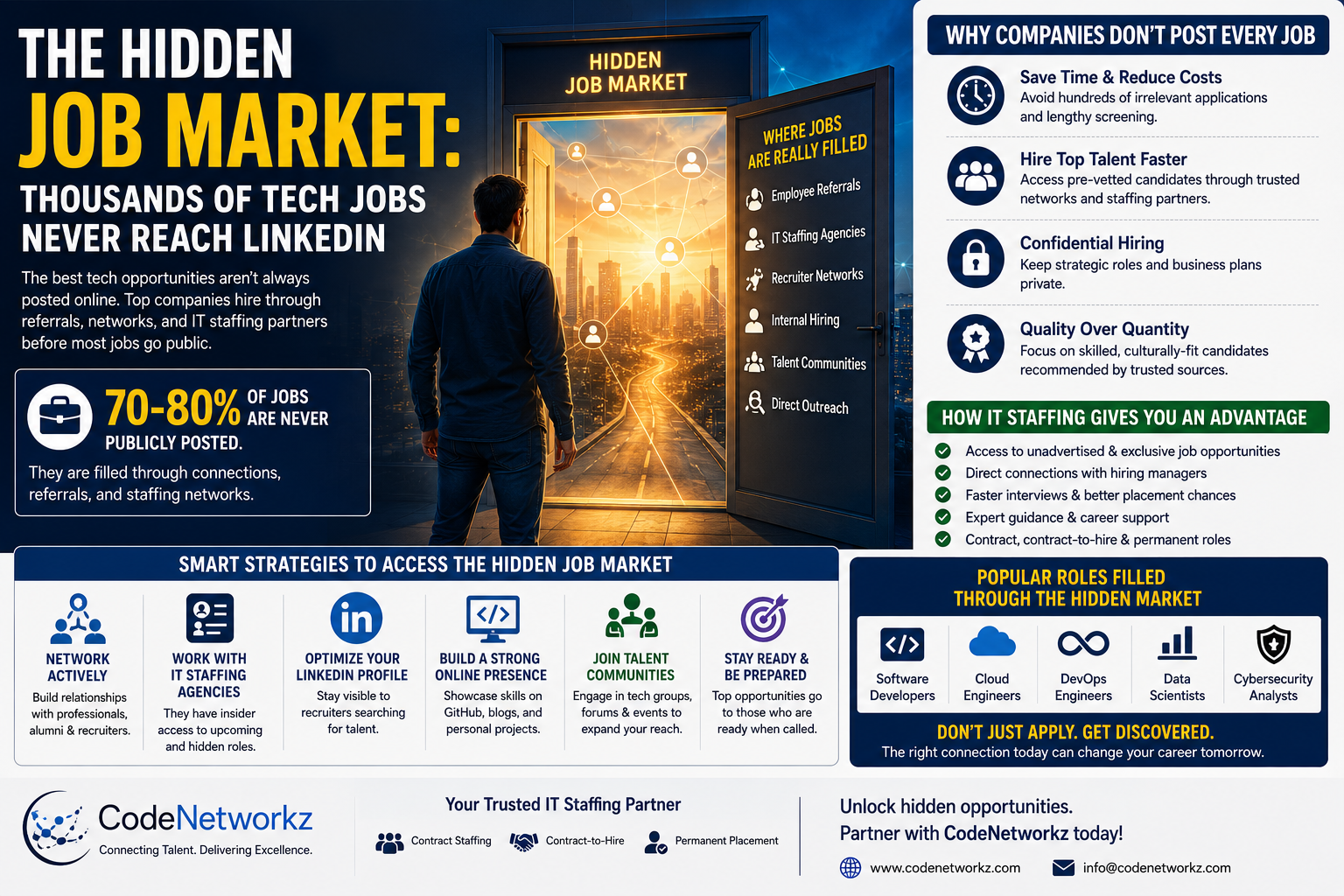
What many job seekers don't realize is that a significant number of technology positions are never publicly advertised. Instead, they are filled through referrals, staffing agencies, internal talent pools, employee recommendations, and direct recruiter outreach. This hidden network of opportunities is known as the hidden job market.
Whether you're a software developer, cloud engineer, cybersecurity analyst, data scientist, DevOps professional, or IT consultant, understanding how the hidden job market works can dramatically improve your chances of finding your next role.
Let's explore why many tech jobs never reach LinkedIn—and how you can access opportunities before everyone else.
What Is the Hidden Job Market?
The hidden job market refers to positions that employers fill without publicly advertising them on major job boards.
Instead of posting every vacancy online, many organizations prefer to hire through:
- Employee referrals
- IT staffing agencies
- Internal promotions
- Previous applicants
- Professional networking
- Campus recruiting
- Talent communities
- Recruiter databases
These hiring methods save time, reduce recruitment costs, and often produce stronger candidates.
Why Companies Don't Post Every Tech Job
Hiring isn't just about collecting resumes.
Companies want qualified candidates as quickly as possible.
Posting a job publicly can generate hundreds or even thousands of applications, many of which don't match the required skills.
Reviewing those applications takes valuable time.
Instead, employers frequently turn to trusted staffing partners or existing professional networks to identify qualified candidates more efficiently.
The Role of IT Staffing Agencies
IT staffing firms play a crucial role in today's technology hiring landscape.
They build relationships with companies that regularly need skilled professionals for:
- Contract positions
- Contract-to-hire roles
- Permanent employment
- Project-based assignments
- Remote opportunities
Because staffing agencies work closely with hiring managers, they often know about open positions before they're publicly announced.
This gives registered candidates early access to opportunities.
Employee Referrals: One of the Fastest Hiring Channels
Many companies encourage employees to recommend qualified professionals.
Employee referrals often lead to:
- Faster resume reviews
- Higher interview rates
- Better cultural fit
- Shorter hiring timelines
Building genuine professional relationships can increase your chances of receiving referrals.
Recruiters Search for Candidates Every Day
Many job seekers assume recruiters only respond to applications.
In reality, recruiters actively search for talent using:
- Internal candidate databases
- GitHub
- Professional communities
- Previous applicants
- Technology forums
If your online profile is complete and optimized, recruiters may contact you even if you haven't applied for a position.
Why Networking Still Matters
Networking isn't about asking strangers for jobs.
It's about building professional relationships over time.
Effective networking includes:
- Attending technology conferences
- Joining local developer communities
- Participating in hackathons
- Connecting with alumni
- Engaging on LinkedIn
- Joining open-source projects
These connections often lead to opportunities unavailable through public job boards.
Your LinkedIn Profile Is More Important Than Ever
Although many jobs never appear on LinkedIn, recruiters still use LinkedIn extensively to search for talent.
An optimized profile should include:
- Professional headline
- Technical skills
- Certifications
- Portfolio links
- GitHub profile
- Work experience
- Projects
- Recommendations
Treat LinkedIn as your professional storefront.
Build a Portfolio That Gets Attention
Employers don't just want resumes.
They want proof of your skills.
A strong portfolio may include:
- Full-stack applications
- AI projects
- Cloud deployments
- APIs
- Mobile applications
- DevOps pipelines
- Data dashboards
Host projects on GitHub and include links in your resume and LinkedIn profile.
Stay Connected With Staffing Recruiters
Many professionals contact recruiters only when they need a job.
Instead, build long-term relationships.
Keep recruiters informed about:
- New certifications
- Updated skills
- Career goals
- Availability
- Recent projects
When new opportunities arise, you'll already be on their radar.
Join Talent Communities
Many organizations maintain talent communities where candidates can:
- Receive job alerts
- Attend webinars
- Connect with recruiters
- Learn about future hiring
Joining these communities increases your visibility.
Contract Roles Can Lead to Permanent Careers
Some candidates overlook contract opportunities.
However, contract positions often provide:
- Industry experience
- Professional networking
- Competitive compensation
- Exposure to enterprise projects
- Opportunities for full-time conversion
Many permanent employees begin their careers through contract assignments.
Learn High-Demand Technologies
The hidden job market strongly favors candidates with current technical skills.
In-demand technologies include:
- Artificial Intelligence
- Machine Learning
- Python
- Java
- React
- Node.js
- AWS
- Microsoft Azure
- Google Cloud Platform
- Kubernetes
- Docker
- Terraform
- Cybersecurity
- Salesforce
- SAP
- Snowflake
- Power BI
Continuous learning increases recruiter interest.
Personal Branding Opens Hidden Opportunities
Recruiters notice professionals who share knowledge.
Consider:
- Writing technical blogs
- Publishing LinkedIn posts
- Contributing to GitHub
- Speaking at meetups
- Creating tutorial videos
- Participating in open-source projects
A visible professional brand attracts recruiters.
Keep Your Resume Ready
Unexpected opportunities move quickly.
Update your resume regularly with:
- New projects
- Certifications
- Technical skills
- Measurable achievements
- Recent experience
When recruiters contact you, you'll be ready.
Follow Up Professionally
If you connect with a recruiter:
- Respond promptly.
- Be professional.
- Share your updated resume.
- Clarify your career interests.
- Stay in touch periodically.
Professional communication builds lasting relationships.
Common Mistakes Job Seekers Make
Avoid these mistakes:
- Applying only through LinkedIn
- Ignoring staffing agencies
- Not networking
- Using outdated resumes
- Leaving LinkedIn incomplete
- Failing to showcase projects
- Waiting until unemployment to contact recruiters
- Not following up
Successful candidates use multiple job search strategies.
How IT Staffing Gives You an Advantage
IT staffing companies bridge the gap between employers and technology professionals.
Benefits include:
- Access to unadvertised jobs
- Faster interview scheduling
- Resume guidance
- Market insights
- Salary information
- Career advice
- Contract and permanent opportunities
- Long-term recruiter relationships
Instead of competing with thousands of applicants, staffing firms often present a smaller group of qualified candidates directly to hiring managers.
Industries Using Hidden Hiring Channels
The hidden job market extends across many industries:
- Information Technology
- Healthcare
- Financial Services
- Retail Technology
- Manufacturing
- Telecommunications
- Artificial Intelligence
- Cloud Computing
- Cybersecurity
- Government Contracting
Organizations across these sectors rely on staffing partners to identify specialized talent.
How CodeNetworkz Helps Connect Talent With Opportunity
At CodeNetworkz, we understand that the best opportunities aren't always publicly advertised. Our IT staffing solutions connect skilled professionals with employers seeking contract, contract-to-hire, and permanent talent across industries.
By working closely with both clients and candidates, we help reduce hiring timelines while matching the right people with the right opportunities. Whether you're an experienced professional looking for your next challenge or a company building a high-performing technology team, our staffing expertise helps simplify the hiring process.
Final Thoughts
The biggest mistake many job seekers make is believing that every available tech job is listed on LinkedIn or other public job boards.
In reality, a large portion of hiring happens behind the scenes through referrals, staffing agencies, recruiter networks, and professional relationships.
To increase your chances of success, don't rely on one platform alone. Build meaningful connections, maintain an up-to-date resume, strengthen your LinkedIn profile, showcase real-world projects, and stay engaged with trusted IT staffing partners.
The hidden job market rewards professionals who are visible, prepared, and proactive. By expanding your job search beyond public listings, you'll gain access to opportunities that many candidates never even know exist—and position yourself for a stronger, more successful career in the ever-evolving technology industry.