
How International Students Can Compete With U.S. Citizens for Tech Jobs in 2026 (Complete F-1 Student Guide)
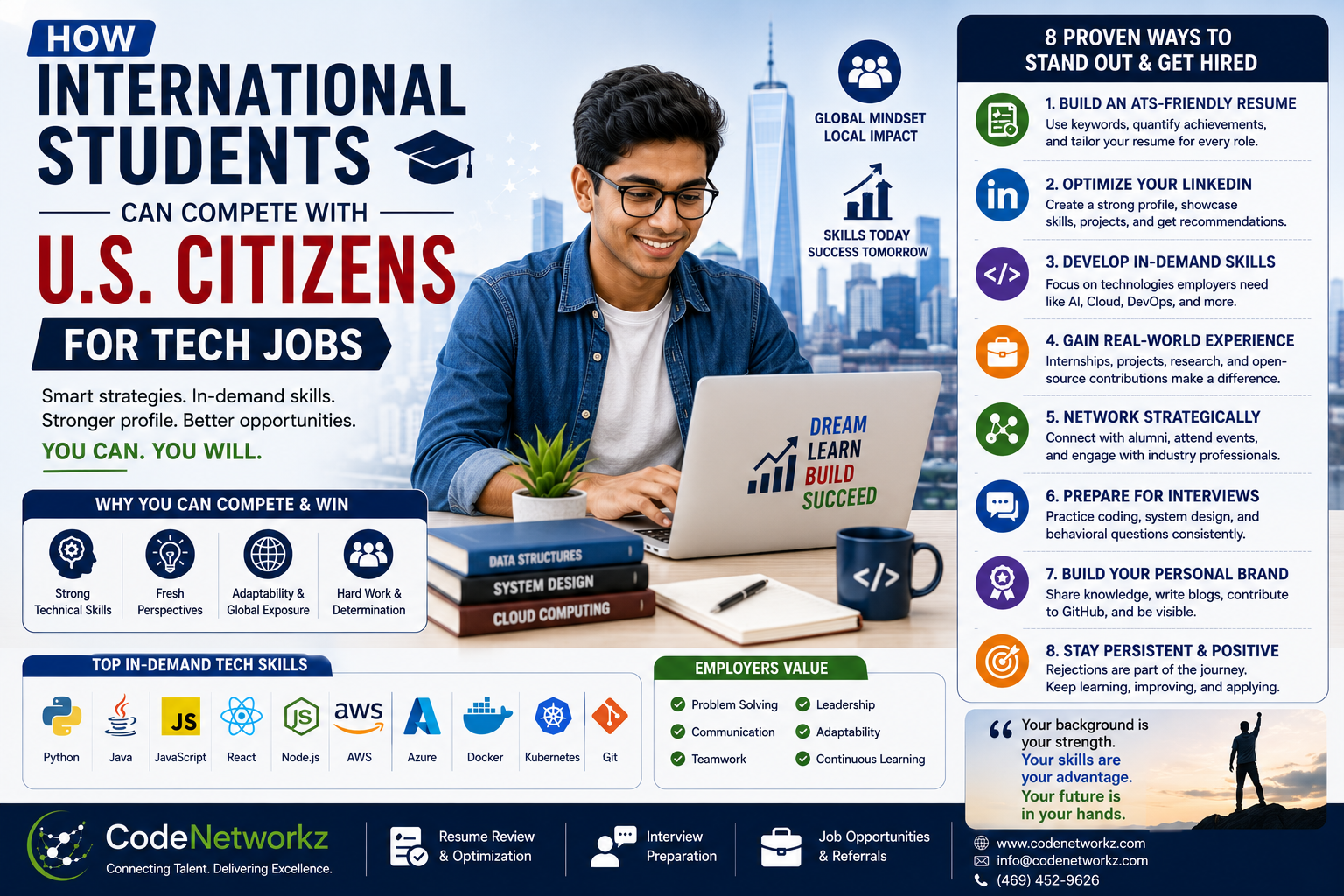
How International Students Can Compete With U.S. Citizens for Tech Jobs in 2026 (Complete F-1 Student Guide)
How International Students Can Compete With U.S. Citizens for Tech Jobs
Every year, thousands of international students graduate from U.S. universities with the dream of launching successful careers in technology. They earn degrees in computer science, information technology, data science, artificial intelligence, cybersecurity, engineering, and other high-demand fields. Yet many worry about one question:
"Can I really compete with U.S. citizens for tech jobs?"
The answer is yes—but not by following the same job search strategy as everyone else.
While work authorization and hiring processes can create additional considerations for employers, companies ultimately hire candidates who can solve problems, deliver value, and contribute to business success. If you demonstrate the right combination of technical expertise, communication skills, professional experience, and adaptability, you can become a highly competitive candidate.
This guide explains how F-1 students can position themselves for success and compete confidently in today's U.S. technology job market.
Understanding the Tech Hiring Landscape
The U.S. technology industry continues to experience rapid growth. Organizations across healthcare, finance, retail, manufacturing, education, logistics, and government are investing heavily in digital transformation, cloud computing, artificial intelligence, cybersecurity, and data analytics.
As businesses modernize their systems, they need professionals who can:
- Build scalable applications
- Protect digital infrastructure
- Analyze business data
- Develop AI solutions
- Automate processes
- Design cloud architecture
- Improve customer experiences
This demand creates excellent opportunities for skilled international students.
Stop Comparing Yourself to Other Candidates
One of the biggest mistakes international students make is assuming they are automatically at a disadvantage.
Employers evaluate many factors beyond citizenship, including:
- Technical knowledge
- Problem-solving ability
- Project experience
- Communication skills
- Teamwork
- Leadership potential
- Adaptability
- Professional attitude
Your goal is to demonstrate why you're the best person for the role—not focus on what you cannot control.
Build Skills That Employers Need
Technology hiring is increasingly skill-driven.
Some of the most sought-after skills in 2026 include:
Programming Languages
- Python
- Java
- JavaScript
- TypeScript
- C#
- Go
Cloud Platforms
- AWS
- Microsoft Azure
- Google Cloud Platform
Web Technologies
- React
- Angular
- Node.js
- Spring Boot
- .NET
Data Technologies
- SQL
- Snowflake
- Databricks
- Apache Spark
DevOps
- Docker
- Kubernetes
- Terraform
- Jenkins
- GitHub Actions
Emerging Technologies
- Artificial Intelligence
- Machine Learning
- Generative AI
- Cybersecurity
- Data Engineering
Focus on practical expertise rather than simply learning theoretical concepts.
Gain Real-World Experience
Many employers prefer candidates with practical experience.
You can strengthen your resume through:
- CPT internships
- University research projects
- Open-source contributions
- Freelance projects
- Hackathons
- Personal software projects
- Volunteer technology work
Every project helps demonstrate your ability to solve real business problems.
Create an ATS-Friendly Resume
Most companies use Applicant Tracking Systems (ATS) before recruiters review resumes.
To improve your chances:
- Customize your resume for each application.
- Include relevant technical keywords.
- Use simple formatting.
- Quantify achievements.
- Highlight measurable business results.
Instead of writing:
"Worked on cloud project."
Write:
"Designed AWS cloud infrastructure that improved deployment efficiency by 40%."
Specific results create stronger resumes.
Optimize Your LinkedIn Profile
Recruiters actively search LinkedIn for qualified candidates.
Your profile should include:
- Professional photo
- Strong headline
- Technical skills
- Certifications
- Portfolio projects
- GitHub link
- Career summary
- Internship experience
- Recommendations
A complete profile increases your visibility.
Develop an Impressive Portfolio
Your portfolio demonstrates your capabilities beyond your resume.
Include projects such as:
- AI applications
- Mobile apps
- Full-stack websites
- Cloud deployments
- APIs
- Cybersecurity labs
- Data dashboards
Host projects on GitHub and explain the business problems they solve.
Learn How to Network
Many technology jobs are filled through referrals rather than public job boards.
Expand your network by:
- Attending career fairs
- Connecting with alumni
- Joining technology meetups
- Participating in hackathons
- Engaging on LinkedIn
- Joining student organizations
Networking isn't about asking for jobs—it's about building genuine professional relationships.
Improve Communication Skills
Technical ability alone isn't enough.
Employers value professionals who can:
- Explain technical concepts clearly
- Work effectively in teams
- Present ideas confidently
- Collaborate with stakeholders
- Solve problems under pressure
Practice presentations, group discussions, and mock interviews regularly.
Prepare for Technical Interviews
Technology interviews often include:
- Coding challenges
- Data structures
- Algorithms
- SQL queries
- System design
- Cloud architecture
- Debugging exercises
Practice consistently using platforms like LeetCode, HackerRank, and CodeSignal.
Master Behavioral Interviews
Recruiters also evaluate your professional behavior.
Prepare stories about:
- Leadership
- Teamwork
- Conflict resolution
- Problem-solving
- Adaptability
- Learning from mistakes
Use the STAR method:
- Situation
- Task
- Action
- Result
Structured answers help interviewers understand your impact.
Build a Personal Brand
Recruiters notice professionals who actively contribute to the technology community.
Ways to build your brand:
- Publish technical blogs
- Share LinkedIn articles
- Create YouTube tutorials
- Contribute to open-source software
- Participate in coding competitions
- Speak at student events
A strong online presence increases credibility.
Earn Industry Certifications
Certifications demonstrate commitment to learning.
Popular certifications include:
- AWS Certified Solutions Architect
- Microsoft Azure Fundamentals
- Google Cloud Professional Cloud Architect
- Certified Kubernetes Administrator
- Salesforce Administrator
- CompTIA Security+
- Microsoft Power BI Data Analyst
- SAP Certifications
While certifications don't replace experience, they strengthen your profile.
Apply Strategically
Avoid sending the same resume to hundreds of companies.
Instead:
- Research employers carefully.
- Customize every application.
- Match your resume with the job description.
- Write personalized cover letters when requested.
- Apply early.
Quality applications outperform mass applications.
Stay Updated on Immigration Requirements
Understanding employment authorization is essential.
Maintain communication with your university's Designated School Official (DSO) and ensure you follow all applicable rules related to CPT, OPT, and your F-1 status. Staying informed helps you make confident career decisions and avoid unnecessary complications.
Don't Limit Yourself to Big Tech
Many students focus exclusively on well-known companies.
Excellent opportunities also exist in:
- Healthcare technology
- Financial services
- Retail technology
- Manufacturing
- Logistics
- Government contractors
- Consulting firms
- Startups
- Mid-sized software companies
These organizations often provide faster hiring processes and broader learning opportunities.
Work With IT Staffing Firms
Technology staffing firms connect candidates with employers seeking specialized talent.
Benefits include:
- Access to exclusive job openings
- Resume guidance
- Interview preparation
- Career advice
- Contract and permanent opportunities
- Faster hiring processes
Building relationships with recruiters expands your opportunities.
Common Mistakes F-1 Students Should Avoid
Avoid these common errors:
- Applying without customizing your resume
- Ignoring ATS optimization
- Weak LinkedIn profile
- No portfolio projects
- Limited networking
- Poor interview preparation
- Waiting until graduation to begin applying
- Focusing only on large technology companies
- Not improving communication skills
Small improvements can significantly increase your chances of success.
How CodeNetworkz Helps International Students
At CodeNetworkz, we help international students connect with employers seeking skilled technology professionals across software development, cloud computing, cybersecurity, AI, ERP, CRM, data engineering, and enterprise technology.
Our recruitment specialists support candidates with resume optimization, interview preparation, career guidance, and access to contract, contract-to-hire, internship, and permanent opportunities. Whether you're beginning your career through CPT, transitioning to OPT, or searching for long-term employment, we help you present your skills with confidence and connect with organizations looking for exceptional talent.
Final Thoughts
Competing with U.S. citizens for technology jobs isn't about proving that you're better—it's about demonstrating that you have the skills, experience, and professionalism to help an employer succeed.
Employers consistently hire candidates who solve problems, adapt quickly, communicate effectively, and continue learning. By building in-demand technical skills, gaining practical experience through internships and projects, creating an ATS-friendly resume, strengthening your LinkedIn profile, expanding your professional network, and preparing thoroughly for interviews, you can position yourself as a highly competitive candidate.
Success doesn't come from sending the most applications—it comes from sending the right applications with a strategy that showcases your value. With persistence, preparation, and a commitment to continuous improvement, you can build a rewarding technology career in the United States and turn your education into long-term professional success.