
The Fastest Way for CPT Students to Land Their First U.S. Internship
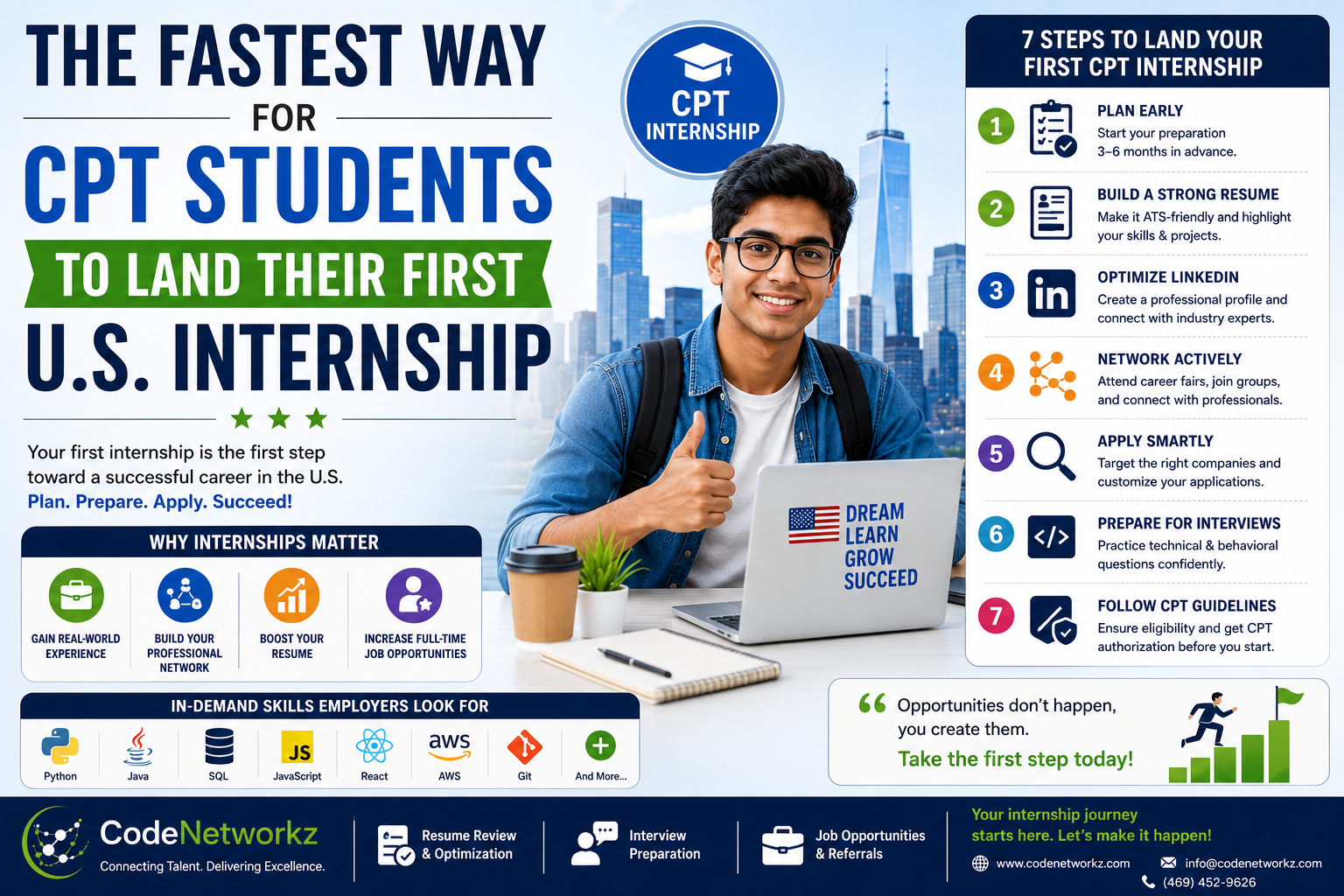
The Fastest Way for CPT Students to Land Their First U.S. Internship
The Fastest Way for CPT Students to Land Their First U.S. Internship
For many international students, getting the first internship in the United States feels like the biggest challenge of their academic journey. You've worked hard to earn admission to a U.S. university, adapted to a new education system, and developed technical skills that employers need. Yet, when it's time to apply for internships through Curricular Practical Training (CPT), the competition can be overwhelming.
Hundreds of applications may result in only a handful of responses—or none at all. It's easy to assume that employers aren't interested in hiring international students, but that's rarely the case. More often, candidates struggle because they rely on ineffective job search strategies, generic resumes, or limited networking.
The good news is that many students secure excellent internships every year by following a structured approach. This guide explains the fastest and smartest way to land your first CPT internship and begin building a successful career in the United States.
What Is a CPT Internship?
Curricular Practical Training (CPT) allows eligible F-1 international students to gain practical work experience directly related to their academic program while continuing their studies.
A CPT internship helps students:
- Apply classroom knowledge in real business environments
- Develop technical and professional skills
- Build industry connections
- Strengthen their resume
- Improve employment opportunities after graduation
Many employers view internship experience as one of the strongest indicators of future job performance.
Why Your First Internship Matters
Your first internship is more than temporary work experience.
It helps you:
- Build U.S. work experience
- Understand workplace culture
- Develop professional communication skills
- Gain industry references
- Expand your professional network
- Improve your chances of securing OPT and full-time employment
Many companies hire former interns for permanent positions after graduation.
Start Your Search Early
One of the biggest mistakes students make is waiting until the semester begins before looking for internships.
Many companies recruit interns months in advance.
An ideal timeline looks like this:
4–6 Months Before
- Update your resume.
- Build your LinkedIn profile.
- Complete personal projects.
- Research target companies.
3–4 Months Before
- Start applying.
- Attend career fairs.
- Network with recruiters.
1–2 Months Before
- Schedule interviews.
- Prepare technical assessments.
- Follow up on applications.
Early preparation gives you a significant advantage.
Build an ATS-Friendly Resume
Before a recruiter reads your resume, it often passes through an Applicant Tracking System (ATS).
To improve your chances:
- Customize your resume for every application.
- Include keywords from the job description.
- Use simple formatting.
- Highlight relevant technical skills.
- Showcase measurable achievements.
Instead of writing:
"Worked on Java project."
Write:
"Developed a Java Spring Boot application that reduced processing time by 30%."
Specific accomplishments make your resume more compelling.
Create an Outstanding LinkedIn Profile
Recruiters regularly search LinkedIn for internship candidates.
Your profile should include:
- Professional photo
- Strong headline
- Career summary
- Technical skills
- Projects
- Certifications
- Internship interests
- GitHub portfolio
Stay active by sharing industry insights and connecting with professionals.
Build Real Projects
Employers don't hire students based only on coursework.
They want proof that you can solve real problems.
Create projects such as:
- Full-stack web applications
- AI chatbots
- Cloud deployment projects
- Mobile applications
- REST APIs
- Data dashboards
- Cybersecurity labs
- Machine learning models
Upload your work to GitHub and include links on your resume.
Apply Strategically
Don't submit hundreds of generic applications.
Instead:
- Target companies that hire international students.
- Match your skills with each job description.
- Customize your resume.
- Write personalized cover letters when requested.
A smaller number of high-quality applications usually produces better results.
Network With Professionals
Many internships are filled through referrals rather than public job postings.
Expand your network by:
- Attending university career fairs
- Joining technology clubs
- Connecting with alumni
- Participating in hackathons
- Joining LinkedIn groups
- Attending local tech meetups
Networking is about building genuine professional relationships—not asking strangers for jobs.
Learn the Most In-Demand Skills
Technology employers continue hiring students with expertise in:
- Python
- Java
- SQL
- JavaScript
- React
- Node.js
- AWS
- Microsoft Azure
- Docker
- Kubernetes
- Git
- Terraform
- Machine Learning
- Artificial Intelligence
- Cybersecurity
- Data Analytics
Continuous learning helps your resume stand out.
Prepare for Technical Interviews
Many CPT internships require technical assessments.
Practice:
- Coding challenges
- SQL queries
- Data structures
- Algorithms
- Object-oriented programming
- Cloud concepts
- System design basics
Use platforms like LeetCode, HackerRank, and CodeSignal to improve your confidence.
Master Behavioral Interviews
Technical knowledge alone isn't enough.
Recruiters also evaluate:
- Communication
- Teamwork
- Leadership
- Problem-solving
- Adaptability
Use the STAR method when answering behavioral questions:
- Situation
- Task
- Action
- Result
Clear, structured answers leave a strong impression.
Understand CPT Rules
Before accepting an internship:
- Ensure the position relates to your major.
- Obtain CPT authorization before starting work.
- Follow your university's approval process.
- Maintain full-time student status.
- Stay in regular contact with your Designated School Official (DSO).
Following CPT regulations protects your F-1 status.
Don't Ignore Smaller Companies
Many students focus only on well-known technology companies.
However, startups and mid-sized businesses often provide:
- Faster hiring
- More hands-on experience
- Greater responsibility
- Direct mentorship
- Flexible learning opportunities
These experiences can strengthen your resume just as much as large-company internships.
Develop Soft Skills
Employers consistently value:
- Professional communication
- Time management
- Collaboration
- Critical thinking
- Adaptability
- Initiative
These skills often determine whether an intern receives a return offer.
Build Your Personal Brand
Stand out by creating an online professional presence.
Ideas include:
- Writing technical blogs
- Publishing LinkedIn articles
- Contributing to GitHub
- Sharing project demonstrations
- Participating in open-source projects
Personal branding increases recruiter visibility.
Stay Organized
Track every application using a spreadsheet.
Include:
- Company name
- Position
- Application date
- Recruiter contact
- Interview status
- Follow-up date
Organization prevents missed opportunities.
Common Mistakes CPT Students Make
Avoid these common errors:
- Waiting too long to apply
- Sending the same resume everywhere
- Ignoring networking
- Weak LinkedIn profile
- No portfolio projects
- Poor interview preparation
- Applying for unrelated roles
- Starting work before CPT approval
- Failing to follow up after interviews
Small improvements can significantly increase your success rate.
How CPT Internship Platforms Can Help
Finding your first internship becomes easier when you use resources designed for international students.
Career platforms and staffing partners often provide:
- Internship opportunities
- Resume reviews
- Interview coaching
- Employer connections
- Career guidance
- Networking events
- Professional development resources
These services can help you navigate the U.S. job market more effectively.
How CodeNetworkz Supports Future IT Professionals
At CodeNetworkz, we help aspiring technology professionals connect with employers offering contract, contract-to-hire, internship, and permanent opportunities. Our recruitment team works closely with candidates to improve resumes, prepare for interviews, and match skills with the right organizations.
Whether you're searching for your first CPT internship or planning your long-term career, we provide the guidance and industry connections needed to help you succeed.
Final Thoughts
Landing your first CPT internship may seem challenging, but it becomes much more achievable with the right strategy. Success doesn't come from submitting hundreds of applications—it comes from presenting yourself as a well-prepared, motivated, and skilled candidate.
Start your search early, build an ATS-friendly resume, create meaningful technical projects, optimize your LinkedIn profile, strengthen your interview skills, and actively network with recruiters and industry professionals. Most importantly, understand and follow CPT requirements so you can focus on gaining valuable experience while maintaining your student status.
Your first U.S. internship is more than a line on your resume—it's the beginning of your professional journey. With preparation, persistence, and a proactive approach, you can secure an internship that builds your confidence, expands your network, and opens the door to future opportunities in the U.S. technology industry.