
How Much Does IT Staffing Cost? A 2026 Pricing Guide for Enterprises
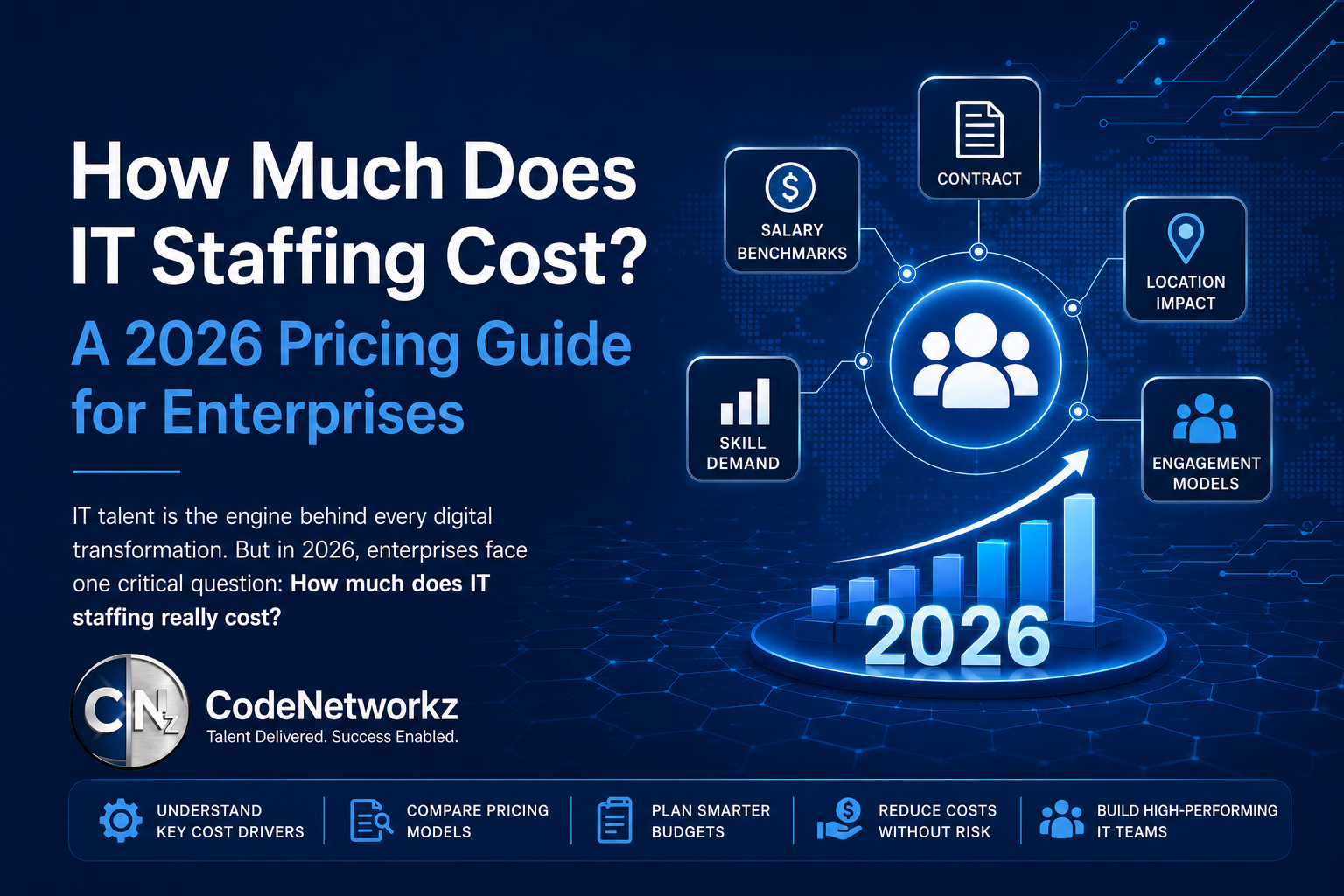
How Much Does IT Staffing Cost? A 2026 Pricing Guide for Enterprises
Why IT Staffing Pricing Feels So Opaque
Enterprises frequently ask staffing partners for a single number, but IT staffing pricing is built from several moving parts: the candidate's pay rate, the staffing firm's markup, employer tax burden, benefits administration, and sometimes a placement or conversion fee. Understanding each piece helps you evaluate proposals apples-to-apples.
In 2026, rising demand for AI/ML, cloud, and ERP specialists has pushed bill rates up in these niches specifically, even as rates for more commoditized roles have stayed flat.
Bill Rate vs. Pay Rate vs. Markup
The pay rate is what the contractor takes home. The bill rate is what your company pays the staffing firm. The difference — the markup — covers payroll taxes, workers' compensation, benefits, recruiting overhead, and the staffing firm's margin. Markups typically range from 20% to 50% depending on role seniority, geography, and contract length.
Specialized, hard-to-fill roles like machine learning engineers or SAP architects often carry markups at the higher end of that range because of sourcing difficulty, not necessarily firm profit-taking.
Contract-to-Hire and Permanent Placement Fees
Contract-to-hire arrangements often include a built-in conversion structure, where a portion of the markup effectively pre-pays a reduced or waived conversion fee if you decide to hire the contractor permanently. Direct permanent placements are typically priced as a percentage of the candidate's first-year salary, commonly in the 15% to 25% range for technical roles.
Always ask a prospective staffing partner to break down exactly what's included in a quoted rate — some firms bundle background checks, drug screening, and compliance verification; others bill these separately.
Hidden Costs That Affect Your Real Budget
Beyond the quoted rate, factor in onboarding time, ramp-up productivity loss, and the cost of a mis-hire if a contractor doesn't work out. A staffing partner with strong compliance practices (EEO, OFCCP, FCRA) also reduces your legal exposure — a cost that's invisible until something goes wrong.
Speed matters too: a slightly higher bill rate from a firm that fills your role in two weeks instead of eight often produces a better total cost of hire than the cheapest quote.
Getting the Most Value From Your Staffing Spend
The lowest bill rate rarely equals the lowest total cost. CodeNetworkz structures staffing engagements around transparent pricing and compliance-first practices, so enterprises in regulated industries know exactly what they're paying for — and aren't exposed to hidden liability down the line.
Ready to build your team? Connect with CodeNetworkz to discuss your staffing needs across contract, contract-to-hire, and permanent placements.