
CPT vs OPT in 2026: The Truth Every International Student Needs to Know
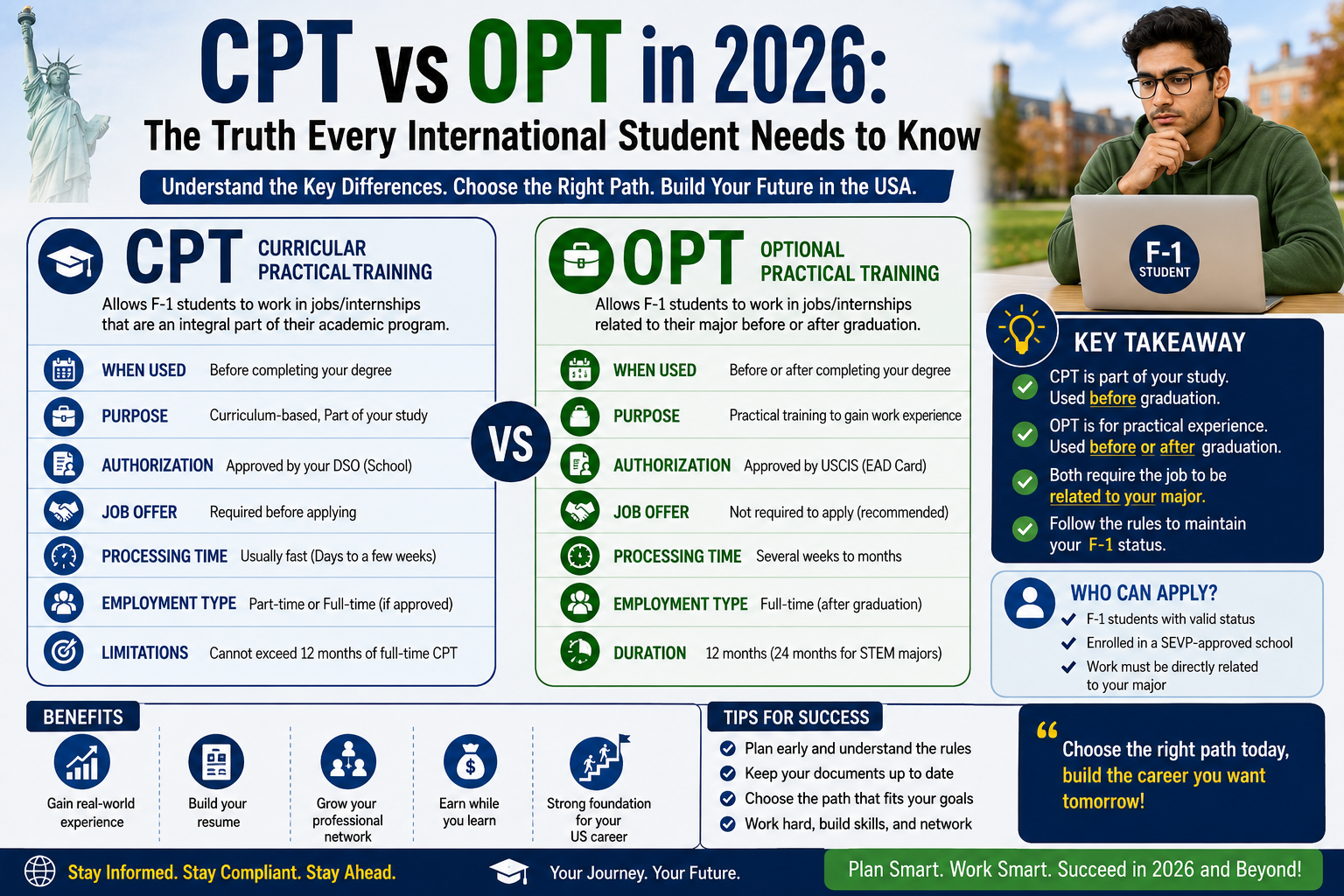
CPT vs OPT in 2026: The Truth Every International Student Needs to Know
CPT vs OPT in 2026: The Truth Every International Student Needs to Know
For thousands of international students studying in the United States, one question comes up repeatedly:
"Should I choose CPT or OPT?"
Understanding the difference between Curricular Practical Training (CPT) and Optional Practical Training (OPT) is one of the most important decisions you'll make during your academic journey. Choosing the right option can shape your internship opportunities, career growth, and even your long-term plans in the U.S.
Many students mistakenly think CPT and OPT are interchangeable. While both allow eligible F-1 students to gain work experience, they serve different purposes, follow different rules, and are used at different stages of your education.
In this guide, we'll explain everything you need to know about CPT and OPT in 2026, including eligibility, benefits, limitations, common mistakes, and tips to maximize your career opportunities.
What Is CPT?
Curricular Practical Training (CPT) allows F-1 international students to work in positions directly related to their field of study while they are still enrolled in their academic program.
Unlike OPT, CPT is designed to complement your education. It provides practical, hands-on experience that is considered part of your curriculum.
CPT may include:
- Paid internships
- Unpaid internships
- Cooperative education programs
- Clinical rotations
- Required work experiences
Students typically use CPT during their degree program to gain professional experience before graduation.
What Is OPT?
Optional Practical Training (OPT) allows eligible F-1 students to work in jobs related to their major before or after completing their degree.
Most students choose Post-Completion OPT, which allows them to begin full-time employment after graduation.
OPT is one of the most popular pathways for international graduates because it provides valuable U.S. work experience and may lead to employer sponsorship.
CPT vs OPT: The Key Differences
Feature | CPT | OPT | Purpose | Curriculum-based training | Practical work experience
When Used | Before graduation | Before or after graduation
Job Requirement | Must relate to your major | Must relate to your major
Authorization | School's Designated School Official (DSO) | USCIS approval required
Processing Time | Usually faster | Can take several weeks or months
Employment Offer | Required before approval | Not always required to apply
Full-Time Work | Allowed if approved | Allowed after graduation
Although both programs provide work authorization, they are designed for different stages of your academic and professional journey.
Who Is Eligible for CPT?
Generally, students must:
- Hold valid F-1 status.
- Be enrolled full-time at an approved institution.
- Have completed the required academic period set by their school (unless graduate program exceptions apply).
- Receive an internship or employment offer related to their major.
- Obtain authorization from their Designated School Official (DSO).
Each university may have additional CPT requirements.
Who Is Eligible for OPT?
Students typically qualify if they:
- Maintain valid F-1 status.
- Complete their academic program requirements.
- Apply within the designated USCIS application window.
- Work in a position directly related to their major field of study.
OPT requires approval from U.S. Citizenship and Immigration Services (USCIS) before employment begins.
Benefits of CPT
CPT offers several advantages for international students.
Gain Real Industry Experience
Employers value practical experience.
A successful internship helps students develop technical skills, workplace communication, and professional confidence.
Build Your Resume Before Graduation
Graduating with internship experience gives you a competitive advantage over candidates with only academic credentials.
Recruiters consistently prioritize applicants who have completed relevant internships.
Expand Your Professional Network
Internships help students connect with:
- Hiring managers
- Team leaders
- Professors
- Alumni
- Industry professionals
Networking often leads to future job opportunities.
Earn While You Learn
Many CPT internships are paid, allowing students to gain experience while helping cover living expenses.
Benefits of OPT
OPT offers opportunities beyond graduation.
Full-Time Employment
Most graduates use Post-Completion OPT to begin their careers in the United States.
This allows employers to evaluate candidates before considering long-term employment.
Career Growth
OPT provides valuable experience working in U.S. companies.
Students gain exposure to:
- Enterprise technologies
- Team collaboration
- Project management
- Professional communication
Potential Employer Sponsorship
Many companies use OPT as a pathway toward long-term employment.
Strong performance during OPT may increase the likelihood of future sponsorship opportunities where available.
Common Mistakes Students Make
Many international students unintentionally make mistakes that delay or affect their employment opportunities.
Waiting Too Long
Students often begin searching for internships or jobs only after authorization.
Start networking and preparing your resume well in advance.
Applying Everywhere
Sending hundreds of generic applications rarely works.
Instead:
- Tailor your resume.
- Customize your LinkedIn profile.
- Apply strategically.
Ignoring Networking
Many jobs are filled through referrals.
Attend:
- Career fairs
- Alumni events
- Tech meetups
- University networking sessions
Weak Resume
Your resume should highlight:
- Projects
- Technical skills
- Certifications
- Internships
- Measurable achievements
High-Demand Skills in 2026
Employers continue hiring professionals skilled in:
- Artificial Intelligence
- Machine Learning
- Data Science
- Cybersecurity
- Cloud Computing
- AWS
- Azure
- Google Cloud
- DevOps
- Docker
- Kubernetes
- Python
- Java
- React
- Node.js
- SQL
- SAP
- Salesforce
- Snowflake
- Power BI
Building expertise in these areas can improve your job prospects regardless of whether you're using CPT or OPT.
How to Choose Between CPT and OPT
Ask yourself these questions:
Are you still studying?
If yes, CPT may be the appropriate option for internships that are part of your academic program.
Have you graduated?
If yes, Post-Completion OPT is often the path students use to begin full-time employment.
Do you already have an internship offer?
CPT generally requires an offer before authorization.
Are you planning your long-term career?
OPT can provide valuable post-graduation work experience that helps launch your professional career.
Job Search Tips for CPT and OPT Students
Whether you're using CPT or OPT:
Optimize Your LinkedIn Profile
Recruiters search LinkedIn daily.
Include:
- Professional headline
- Skills
- Certifications
- Projects
- Internship experience
- Professional photo
Build a Strong Portfolio
Show employers what you've built.
Examples include:
- GitHub repositories
- Portfolio websites
- AI projects
- Cloud deployments
- Mobile apps
Prepare for Interviews
Practice:
- Technical interviews
- Behavioral interviews
- Coding challenges
- STAR method responses
Confidence improves performance.
Continue Learning
Technology evolves quickly.
Stay current by earning certifications and learning new tools.
How CPT vs OPT Affects Your Career
The goal shouldn't simply be obtaining work authorization.
The goal is building a successful career.
Students who secure strong internships during CPT often perform better during OPT because they already understand workplace expectations.
Similarly, graduates who maximize their OPT experience become stronger candidates for future opportunities.
Think of CPT as your career foundation and OPT as your opportunity to grow professionally.
How CPT vs OPT Jobs Can Help
Finding internships and full-time opportunities as an international student can be challenging, especially in a competitive market.
Platforms focused on CPT and OPT opportunities help students connect with employers actively seeking international talent. Along with job listings, they often provide resume guidance, interview preparation, career resources, and job search strategies designed specifically for F-1 students.
Using specialized career resources can save time and improve your chances of landing the right opportunity.
Final Thoughts
CPT and OPT are not competing choices—they are complementary steps in an international student's career journey.
CPT allows you to gain valuable industry experience while you're still studying, helping you build practical skills and strengthen your resume. OPT allows you to transition into the professional workforce after graduation and gain meaningful U.S. work experience.
Success isn't determined solely by whether you choose CPT or OPT. It depends on how effectively you use those opportunities. Build relevant skills, complete impactful projects, network with professionals, tailor your applications, and prepare thoroughly for interviews.
In 2026, employers are looking for candidates who can demonstrate real-world value. By making the most of your CPT and OPT experiences, you'll be well-positioned to stand out in the competitive U.S. job market and take the next step toward a successful international career.