
Before You Apply for CPT: 10 CPT Rules Every International Student Must Know in 2026
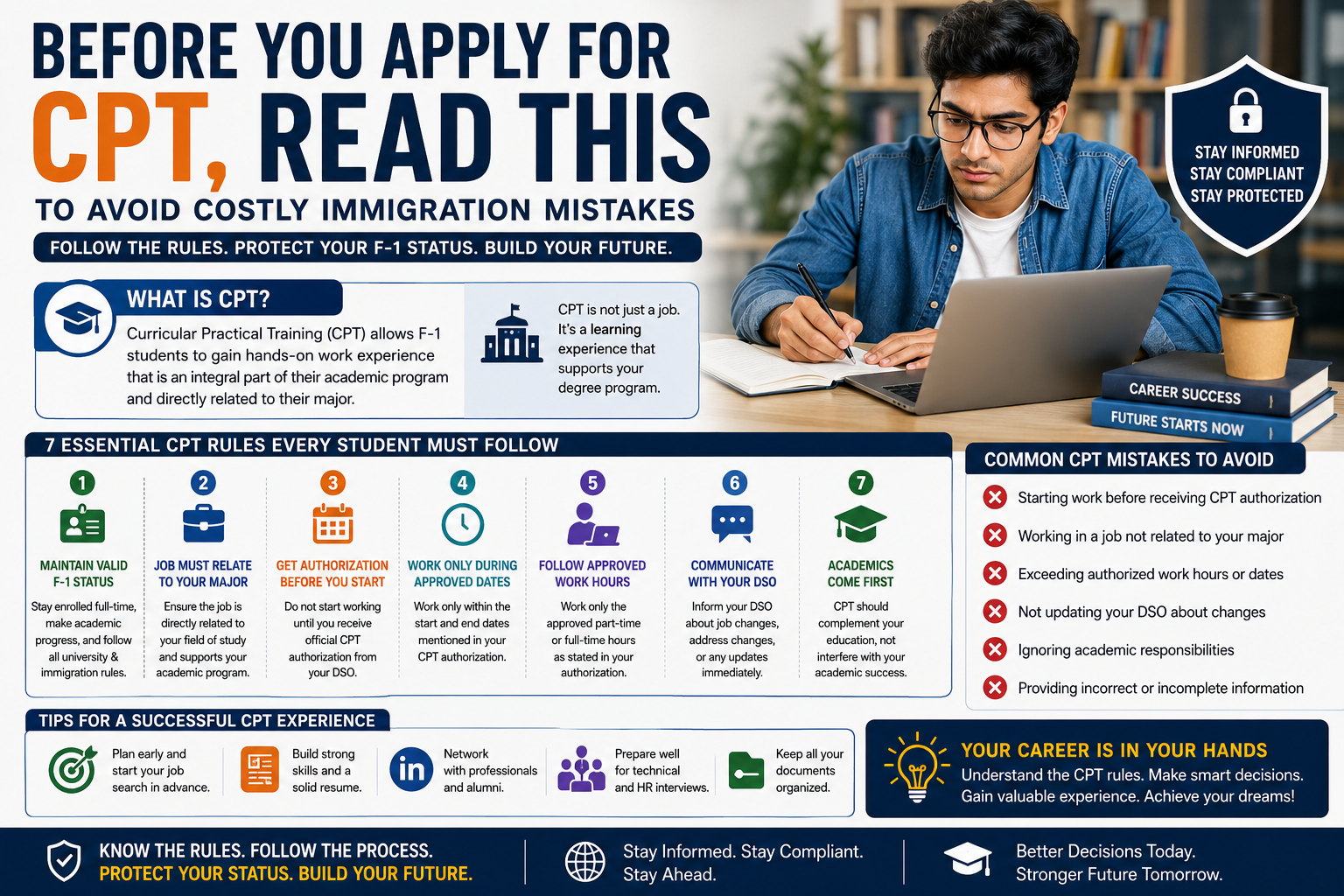
Before You Apply for CPT: 10 CPT Rules Every International Student Must Know in 2026
Before You Apply for CPT, Read This to Avoid Costly Immigration Mistakes
For many international students, Curricular Practical Training (CPT) is the first opportunity to gain real-world work experience in the United States. It allows students to apply classroom knowledge in professional settings, build valuable industry connections, and strengthen their resumes before graduation.
However, CPT also comes with important responsibilities. A misunderstanding of the rules or a simple mistake during the application process can delay your internship, affect your academic progress, or even put your F-1 status at risk.
Every year, students lose valuable opportunities because they assume CPT works like a regular work permit. It doesn't. CPT has specific eligibility requirements, approval procedures, and employment rules that every international student should understand before accepting an internship or job offer.
If you're planning to apply for CPT in 2026, this guide will help you understand the rules, avoid common mistakes, and make informed decisions that support both your education and your future career.
What Is CPT?
Curricular Practical Training (CPT) is employment authorization available to eligible F-1 international students. It allows students to participate in internships, co-operative education programs, or other practical training experiences directly related to their major field of study.
Unlike Optional Practical Training (OPT), CPT is designed to be an integral part of your academic program. The work experience should complement your education rather than replace it.
Many students use CPT for:
- Paid internships
- Unpaid internships
- Cooperative education programs
- Clinical placements
- Required internships
- Practical training courses
The goal is to gain professional experience while continuing your studies.
Why CPT Rules Matter
CPT is governed by immigration regulations as well as your university's academic policies.
Ignoring either one can create problems.
Some of the most common consequences include:
- Delayed internship start dates
- Loss of internship opportunities
- Academic complications
- Employment authorization issues
- Possible violations of F-1 status
Understanding the rules before applying helps you avoid unnecessary risks.
Rule #1: Maintain Valid F-1 Student Status
CPT is available only to students who maintain valid F-1 status.
This generally means:
- Staying enrolled full-time (unless officially authorized otherwise)
- Making satisfactory academic progress
- Following your institution's policies
- Keeping your immigration documents up to date
Maintaining your student status is the foundation for CPT eligibility.
Rule #2: Your Job Must Relate to Your Major
One of the most important CPT requirements is that your employment must be directly related to your field of study.
Examples include:
Computer Science student:
- Software Development
- Cloud Engineering
- Cybersecurity
- Data Engineering
Business student:
- Business Analysis
- Marketing
- Financial Analysis
Healthcare student:
- Clinical internships
- Healthcare administration
Working in an unrelated position could create serious issues during authorization or future immigration processes.
Rule #3: Receive CPT Authorization Before You Start Working
One of the biggest mistakes students make is beginning work before receiving official CPT authorization.
Never assume that:
- A job offer is enough.
- Your manager approved it.
- HR completed the paperwork.
You should begin employment only after receiving the required authorization through your school's designated process.
Starting work early may violate your F-1 status.
Rule #4: Work Only During the Authorized Dates
Your CPT authorization specifies approved employment dates.
Do not:
- Start earlier.
- Continue after the authorization ends.
- Work outside the approved period without obtaining appropriate authorization if required.
Always confirm your authorized employment dates before beginning work.
Rule #5: Follow Approved Work Hours
Depending on your authorization and academic program, CPT may be approved for part-time or full-time employment.
Students should carefully follow the conditions stated in their authorization.
If your authorization specifies part-time employment, do not assume you can increase your hours without approval.
Always consult your Designated School Official (DSO) if your employment situation changes.
Rule #6: Keep Your Academic Program First
Remember why CPT exists.
The primary purpose of your F-1 status is education.
Your internship should support your academic goals—not interfere with them.
Employers appreciate students who successfully balance coursework and professional responsibilities.
Rule #7: Communicate with Your DSO
Your Designated School Official (DSO) plays an important role in the CPT process.
Contact your DSO if:
- You receive a new job offer.
- Your internship dates change.
- Your employer changes.
- Your work location changes.
- Your internship ends early.
- You have questions about your authorization.
Keeping your DSO informed helps ensure your records remain accurate.
Common CPT Mistakes Students Make
Waiting Until the Last Minute
Many students begin searching for internships only a few weeks before the semester starts.
Instead:
- Build your resume early.
- Attend career fairs.
- Network consistently.
- Apply months in advance.
Preparation increases your chances of finding the right opportunity.
Accepting Any Job
Some students accept positions simply because they receive an offer.
However, not every position will meet CPT requirements.
Choose opportunities that align with your academic program and long-term career goals.
Using One Resume for Every Job
Recruiters expect customized applications.
Tailor your resume for every position by:
- Matching technical skills.
- Highlighting relevant projects.
- Including appropriate keywords.
Quality applications consistently outperform mass applications.
Ignoring LinkedIn
Recruiters often review LinkedIn before scheduling interviews.
Your profile should include:
- Professional headline
- Technical skills
- Certifications
- Projects
- Internship experience
- Professional photo
A strong online presence improves visibility.
Forgetting Documentation
Keep copies of:
- Internship offer letters
- Authorization documents
- Academic records
- Employment communications
- Updated resume
Organized records can save time if questions arise later.
Build Skills Before Applying
The strongest CPT candidates bring more than classroom knowledge.
Focus on developing:
- Python
- Java
- SQL
- React
- Node.js
- AWS
- Azure
- Data Analytics
- Machine Learning
- Cybersecurity
- DevOps
- Git
- Docker
- Kubernetes
Technical skills make your applications more competitive.
Networking Can Help You Find Better CPT Opportunities
Many internships are never publicly advertised.
Build relationships with:
- Alumni
- Professors
- Career centers
- Recruiters
- Technology communities
- LinkedIn professionals
Networking often leads to referrals and valuable career advice.
Prepare for Interviews
Employers want candidates who can demonstrate both technical ability and professionalism.
Practice:
- Coding interviews
- Behavioral interviews
- STAR method responses
- Communication skills
- Problem-solving scenarios
Preparation boosts confidence and improves interview performance.
Create a Strong Career Portfolio
Show employers what you've built.
Include:
- GitHub repositories
- Portfolio website
- Case studies
- Cloud projects
- AI applications
- Mobile apps
- Research projects
A portfolio provides evidence of your abilities beyond your resume.
How CPT Rules Support Your Long-Term Career
Following CPT rules isn't just about maintaining your immigration status.
It's also about building a professional reputation.
Employers value candidates who:
- Follow procedures
- Communicate clearly
- Meet deadlines
- Demonstrate professionalism
- Take responsibility
Your internship is often the beginning of your professional network in the United States.
Treat it as an investment in your future.
How CPT Rules Resources Can Help
Navigating CPT requirements can feel overwhelming, especially if it's your first internship in the U.S.
Career platforms focused on international students provide helpful resources such as internship listings, resume reviews, interview preparation, career guidance, and practical job-search strategies designed specifically for F-1 students.
Using reliable guidance and planning ahead can make the CPT process smoother and help you focus on building valuable work experience.
Final Thoughts
Curricular Practical Training is one of the best opportunities available to international students studying in the United States. It offers hands-on experience, industry exposure, and the chance to build professional connections before graduation.
However, CPT comes with important responsibilities. Understanding the rules, maintaining your F-1 status, ensuring your internship relates to your major, obtaining authorization before beginning work, and communicating with your Designated School Official are all essential steps toward a successful experience.
The most successful students don't just find internships—they prepare for them. They build strong technical skills, tailor their resumes, network with professionals, and follow university and immigration procedures carefully.
By understanding CPT rules and avoiding common mistakes, you'll be in a stronger position to gain meaningful experience, protect your student status, and lay the foundation for a successful career in the United States.